Introduction
Client expectations around search engine optimization have shifted dramatically over the last few years. Today, stakeholders no longer care about vanity metrics or massive spreadsheets filled with low-tier links. Instead, they demand clear proof of business impact and sustainable search visibility. Having a 2026 reporting checklist for backlink campaign reporting ensures you deliver transparency and build lasting client trust.
Modern search algorithms prioritize genuine authority, topical relevance, and real human engagement over simple link volume. Consequently, your monthly reports must reflect these deeper quality signals rather than outdated domain scores. When you structure your data clearly, clients immediately understand the value behind every placement you secure. This guide walks you through the exact framework needed to make your link-building reports clear, actionable, and persuasive.
Why Standard Link Reports Fail in 2026
Traditional link-building reports often overwhelm clients with raw data exports that lack strategic context. Sending a CSV file containing fifty URLs and third-party authority scores rarely answers a stakeholder’s biggest questions. Decision-makers want to know how those placements directly influence organic traffic, keyword rankings, and revenue. Without a structured narrative, even the best link-building work can look like an unverified expense.
Furthermore, search engines now evaluate links based on contextual relevance and actual referral traffic. If your report ignores these factors, you miss the opportunity to showcase your true expertise. Following a 2026 reporting checklist for backlink campaign reporting bridges the gap between technical SEO execution and executive business goals. It transforms your agency from a simple vendor into an indispensable growth partner.
Setting Clear Campaign Benchmarks Before Reporting
Accurate reporting begins long before you acquire your very first backlink for a client. You must establish a clear baseline of the website’s current backlink profile, organic traffic, and target keyword positions. Documenting these starting metrics gives you an undeniable point of comparison for future monthly reviews. Moreover, initial benchmarking prevents misunderstandings when search rankings fluctuate naturally during algorithm updates.
During this setup phase, align your reporting metrics directly with the client’s primary commercial objectives. If a business wants to boost sales for a specific product category, track referring domains pointing directly to those commercial pages. Similarly, when managing a guest post service, record the initial organic visibility of target landing pages before publishing new articles. Clear baselines turn your subsequent monthly updates into compelling stories of measurable progress.
Core Link Acquisition and Velocity Metrics
Every thorough report must start with a clear summary of newly acquired links during the reporting period. Present the total number of live placements alongside the number of unique referring domains gained. Unique referring domains matter far more than total link counts because search engines reward diverse endorsement sources. Tracking monthly link velocity also helps you demonstrate consistent, natural growth without triggering algorithmic spam filters.
In addition to raw counts, categorize each new placement by acquisition method and target destination. Clients appreciate seeing whether links came from digital PR, niche edits, or editorial outreach campaigns. When scaling campaigns through structured backlink building packages , segmenting links by tier or topical relevance clarifies where the budget goes. This level of organization proves that your link acquisition strategy is intentional and carefully paced.
Evaluating Link Quality and Relevance Signals
In 2026, a single link from a thriving, industry-relevant publication outweighs dozens of links from dormant blogs. Your report must highlight qualitative metrics that prove the editorial integrity of every referring domain. Include the referring site’s estimated monthly organic traffic, primary geographic audience, and topical alignment with your client’s niche. Showing that a linking site actually ranks for real keywords proves it holds genuine trust with search engines.
You should also verify and report the technical attributes of every acquired placement. Clearly state whether each link carries a standard follow attribute, a sponsored tag, or a user-generated content attribute. Additionally, note the placement location on the page, such as inside the main editorial body versus a footer or sidebar. Contextual links embedded naturally within relevant body paragraphs carry vastly superior ranking power, and clients deserve to see that distinction.
Tracking Link Indexing and Live Status Health
A backlink provides zero SEO value if search engine crawlers have not discovered and indexed the referring page. Therefore, checking indexation status is a non-negotiable step in a 2026 reporting checklist for backlink campaign reporting. Use search console data or reliable indexing verification tools to confirm that Google has crawled the host URL. If high-value placements remain unindexed after several weeks, document the steps your team is taking to encourage discovery.
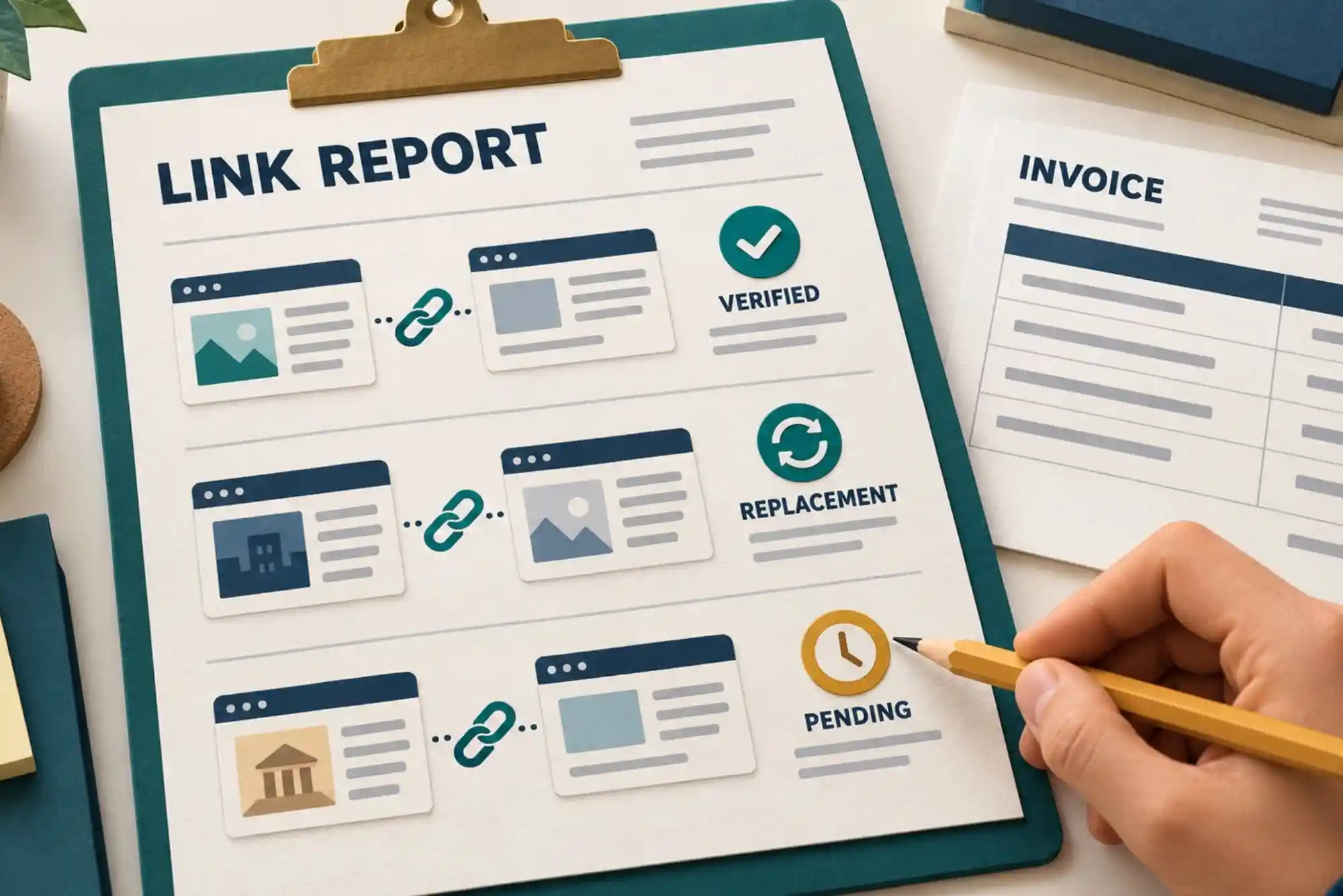
Beyond initial indexing, ongoing link monitoring protects your client’s historical investment from unexpected link rot. Webmasters occasionally delete old articles, update outbound links, or accidentally break URLs during site migrations. Include a dedicated section in your monthly report detailing link retention rates and any reclaimed placements. Proactively catching and fixing lost links demonstrates exceptional diligence and protects long-term ranking stability.
Analyzing Anchor Text Distribution and Diversity
Over-optimized anchor text remains one of the fastest ways to trigger algorithmic penalties or manual actions. Your reporting process must track the exact anchor text used for every new and existing backlink. Break down the profile into branded anchors, naked URLs, generic phrases, partial-match keywords, and exact-match commercial terms. Presenting these ratios helps stakeholders see how you maintain a natural, penalty-proof backlink profile.
Compare your client’s current anchor text distribution against the top three ranking competitors in their specific industry. If competitors rely heavily on branded and natural phrasing, your report should reflect a similar conservative approach. Explaining the strategy behind anchor selection educates clients who might otherwise push for aggressive exact-match keywords. This strategic transparency reinforces your authority as a seasoned SEO professional.
Connecting Backlinks to Rankings and Organic Traffic
Data points only become meaningful when you connect link acquisition directly to search visibility improvements. Pair your monthly link log with keyword ranking movements for the specific target pages receiving those new backlinks. Highlight target search terms that moved from the second page onto the first page of search results. Visual correlations between new editorial placements and upward ranking trends provide undeniable proof of campaign effectiveness.
Furthermore, dive into analytics data to track organic traffic growth and referral visits coming directly from your new links. High-authority placements often drive qualified human readers who click through to explore your client’s offerings. Highlighting actual referral traffic and user engagement metrics proves that your links attract real audiences, not just search bots. This holistic view validates the broader marketing value of every placement you build.
Measuring Conversions and Campaign Return on Investment
Executive stakeholders ultimately measure marketing success through leads, sales, and overall return on investment. Configure your analytics platform to track goal completions originating from organic search landing pages supported by link building. Attribute assisted conversions properly so clients understand how top-of-funnel informational links contribute to bottom-of-funnel purchases. Connecting SEO efforts directly to revenue removes budget friction during contract renewals.
Calculate the estimated organic traffic value by comparing your gained keyword rankings against equivalent pay-per-click advertising costs. Showing a client that their new organic rankings would cost thousands of dollars monthly in paid ads frames your work as a high-yield asset. Unlike paid advertisements that vanish the moment spending stops, quality backlinks continue generating compounding returns for years. Framing your financial metrics around long-term asset creation makes your reports truly unforgettable.
Structuring the Executive Summary and Next Steps
Busy executives rarely read past the first page of a monthly marketing report unless the summary hooks them immediately. Open your document with a concise, plain-English executive summary highlighting the month’s biggest wins and primary takeaways. Summarize total links built, notable high-authority domains secured, key ranking jumps, and overall traffic growth in a few tight paragraphs. Clear communication at the top sets a positive, confident tone for the entire review meeting.
Discover useful insights, fresh ideas, and valuable online resources with Doneland. Whether you are exploring new topics, seeking practical information, or looking for inspiration, Doneland offers an engaging online experience.
Frequently Asked Questions
How often should you send backlink campaign reports to clients?
Monthly reporting is the industry standard for most backlink campaigns because link acquisition and search indexing take time. Weekly updates often create unnecessary anxiety over minor, normal ranking fluctuations. However, sharing quick milestone alerts when you land a major tier-one publication keeps clients engaged between monthly reviews.
What are the most important metrics to include in a backlink report?
Focus on unique referring domains, referring site organic traffic, indexation status, anchor text ratios, and target page ranking movements. Combining these link-specific metrics with organic traffic growth and assisted conversions gives a complete picture of campaign performance. Avoid cluttering reports with vanity scores that do not correlate with actual search visibility.
How long does it take for new backlinks to show results in reports?
Most quality backlinks take between four and twelve weeks to influence target keyword rankings noticeably. Search engines must first crawl the new page, index the link, and recalculate authority signals across the target domain. Setting this realistic timeline early prevents clients from expecting overnight miracles after a single month of work.
How do you report on lost or removed backlinks?
Always include a link health section that tracks live retention rates and identifies any dropped placements from previous months. Explain whether a link disappeared due to a publisher site redesign, a deleted article, or a manual tag change. More importantly, outline your outreach plan to contact the webmaster and restore or replace the lost link.