
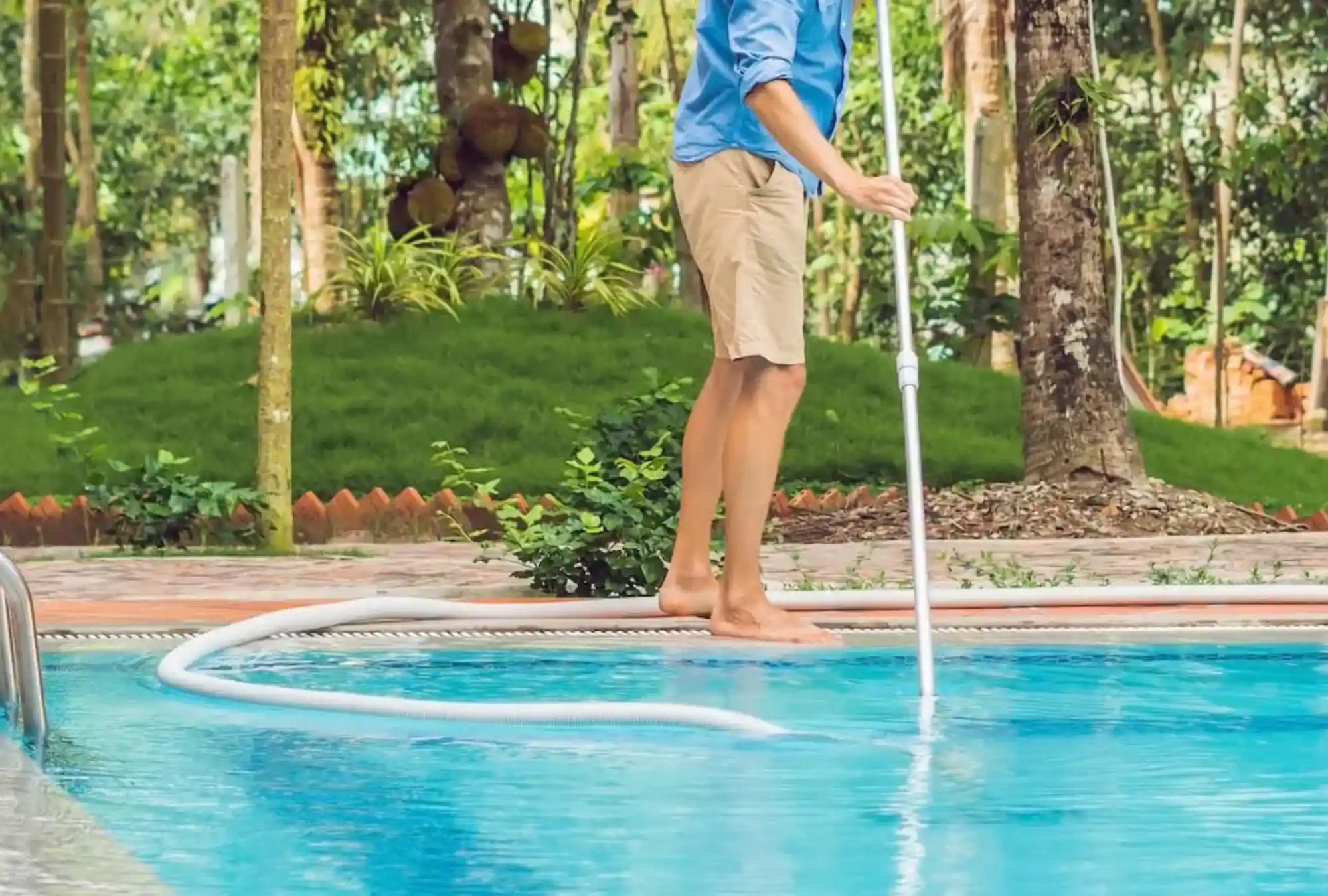
Modern pool design has increasingly favored rich, dark plaster and pebble finishes like midnight blue, obsidian black, and deep slate. These dark-bottom pools create a striking, mirror-like reflection of the sky, naturally absorb solar heat to warm the water, and provide a highly premium backyard aesthetic. However, this sophisticated look comes with a severe maintenance blind spot. Dark surfaces perfectly camouflage one of the most stubborn aquatic invaders: mustard algae. Because you cannot easily see the early stages of a bloom against a dark background, standard visual inspections completely fail. By the time the algae becomes obvious, it has already deeply embedded itself into the pool’s architecture. Preventing this resilient strain requires a shift from visual reactions to proactive, physical routines using an all-in-one robotic pool cleaner.
The Deceptive Nature of Mustard Algae
Mustard algae behaves very differently than the common green algae that freely floats and rapidly turns your entire pool cloudy. It is a clinging, structural strain that attaches firmly to walls and the floor, typically favoring the shaded side of the pool. Visually, it resembles yellowish-brown dust, heavy tree pollen, or fine construction sand.
In a traditional white-plaster pool, this yellow tint is immediately obvious against the bright, sterile background. In a dark-bottom pool, the dark blue or black pigment completely swallows the yellow-brown color, making it nearly invisible. Homeowners frequently mistake the early spores for a light dusting of environmental dirt. Thinking it is just harmless sand, they ignore it, allowing the colony to rapidly multiply unseen along the deep end walls and tight corners.
The Biological Shield: Why Chemical Shocks Fail
Treating mustard algae is notoriously frustrating because it is incredibly resistant to standard chemical sanitation. This specific algae strain protects itself from its environment by secreting a thick, invisible cellular layer known as a biofilm. This mucosal layer acts as a microscopic suit of armor over the algae colony.
If you simply pour gallons of liquid chlorine or calcium hypochlorite shock into the water, the sanitizer hits this biofilm and oxidizes against it, completely failing to penetrate the core of the actual algae cell. You can continuously dump expensive chemicals into a pool, but as long as that physical shield remains intact, the mustard algae will simply wait out the high chlorine levels and bloom again the very next week. Chemistry alone cannot win this battle; you must introduce aggressive physics.
Breaking the Biofilm with Mechanical Agitation
To successfully eradicate this resistant strain, you must bridge the gap between chemistry and physical force. The biological armor must be forcefully torn open before the chlorine can do its job. This requires aggressive, consistent mechanical agitation directly against the pool surface.

While manual brushing with a telescopic pole is effective, it is physically exhausting to deeply scrub the entire floor and vertical walls of a dark-bottom pool every single day. The most efficient strategy is to delegate this labor to an automated machine featuring active, high-speed scrubbing brushes. As the machine’s motorized tracks propel it across the floor and up the walls, the rigid brushes forcefully tear through the invisible biofilm. This action physically rips the algae colonies off the plaster and exposes their vulnerable cellular cores to the chlorinated water, allowing your sanitizer to instantly and permanently neutralize the threat.
Identifying High-Risk Architectural Zones
Mustard algae is not photosynthetic in the same way green algae is; it actually prefers shade and low-circulation environments. When managing a dark-bottom pool, it is critical to ensure your automated hardware is thoroughly navigating the specific areas where the algae is most likely to establish its initial, unseen stronghold.
| Architectural Zone | Environmental Condition | Mechanical Vulnerability |
| Shaded Deep-End Walls | Receives minimal to zero direct UV sunlight throughout the day. | Often missed by the surface currents created by standard return jets. |
| Beneath Diving Boards and Slides | Permanent structural shade and physical overhangs. | Highly difficult to reach and scrub effectively with standard manual poles. |
| Vertical Wall Transitions | The sharp cove where the flat floor abruptly curves upward into the wall. | Algae spores easily drop out of the water column and settle in this low-velocity crease. |
A Proactive Eradication Protocol
If you suspect mustard algae has taken hold in your dark-bottom pool, a casual weekly cleaning cycle will not suffice. You must implement a coordinated attack that combines extreme mechanical friction with a massive chemical spike. Execute the following sequence to ensure complete eradication:
- Decontaminate external fabrics: Mustard algae spores easily cling to fabrics and plastic pool floats. Wash all swimsuits in hot water and wipe down inflatables with a dilute bleach solution so you do not reintroduce the spores tomorrow.
- Hyper-chlorinate the water: Elevate your free chlorine levels to a strict “shock” status (often between 10 to 15 parts per million, depending on your cyanuric acid levels) to prepare the water for the exposed cells.
- Deploy maximum mechanical agitation: Drop your extraction hardware into the pool and set it to a comprehensive floor-and-wall cycle. Let the active brushes physically dismantle the algae colonies across the dark plaster.
- Run the cycle repeatedly: Do not stop after one pass. Run the mechanical scrubbing cycle two to three times over a 48-hour period while the chlorine levels remain highly elevated.
- Sanitize the hardware: After the final run, violently hose off the machine’s rubber tracks and soak its internal filter basket in a bucket of chlorinated water to kill any microscopic spores trapped in the hardware itself.
Owning a dark-bottom pool offers a highly premium aesthetic, but it demands a much higher level of mechanical vigilance. Because you cannot rely on your eyes to detect early algae blooms, you must rely on the consistent, automated friction of dedicated floor hardware. By utilizing intelligent scrubbing to continuously break down invisible biofilms and agitate shaded walls, you can maintain a flawless, sanitary swimming environment without ever letting mustard algae gain a hidden foothold.
Related Reading: Lawn Fertilizing in Omaha, NE
Related Reading: أفضل المنتجات للبيع في تيمو
Related Reading: Fire Alarms For Businesses And HMO
Related Reading: What is inverter AC vs non-inverter AC?
Related Reading: Population of The Usa Today
Related Reading: Wood Staining in Baton Rouge LA — full guide